Macrofhyllya Script: A Handwritten Font That Builds Brand Trust
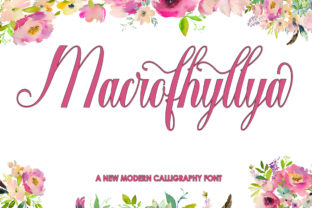
As a small business owner who designs my own labels, social posts, and packaging, I’ve learned that the right script font does more than look pretty—it quietly tells customers who I am before they read a single word. That’s why Macrofhyllya Script has become one of my most-used Fonts for real-world branding. It’s not just another decorative typeface. It’s a modern script font drawn with brush and ink—so it carries warmth, movement, and intention. Its irregular baseline adds gentle rhythm, like handwriting you’d trust in a handwritten note from a friend.
What makes Macrofhyllya Script especially useful for small businesses is how it balances personality with professionalism. It’s expressive enough to stand out on a product label or Instagram story, yet refined enough to feel intentional—not rushed or amateurish. If your brand leans into authenticity—think handmade soaps, artisan coffee roasting, wedding stationery, or wellness coaching—this Script Handwritten font helps reinforce that feeling across every customer touchpoint.
Where Macrofhyllya Script Works Best (and Where to Use It Sparingly)
Think of Macrofhyllya Script as your headline voice: strongest when used intentionally, not everywhere. It shines as a display font—ideal for logos, shop banners, website headers, and social media cover images. On a café menu, it gives your signature latte or seasonal pastry a handcrafted charm. On a candle label, it softens the material details (“Soy wax • Lavender & cedar • Hand-poured in Portland”) without sacrificing clarity.
For product packaging—especially minimalist or watercolor-themed designs—Macrofhyllya Script pairs beautifully with soft textures and muted palettes. I’ve used it for thank-you cards tucked into online orders, and customers regularly comment on how “thoughtful” the whole unboxing feels. It also works well on stickers, tote bags, and even embroidery mockups (when converted to vector outlines by a designer).
That said, avoid using Macrofhyllya Script for body text, ingredient lists, or legal disclaimers. Its organic flow sacrifices some readability at small sizes or on low-resolution screens. For those, pair it with a clean sans serif font—like Inter, Poppins, or Montserrat—for contrast and function. This kind of font pairing is simple but powerful: Macrofhyllya Script sets the tone; your supporting typeface delivers the information.
Real Examples From Real Small Businesses
- A boutique skincare line uses Macrofhyllya Script for its logo and product names (“Golden Chamomile Serum”, “Sea Mist Cleanser”), then switches to a light-weight serif for ingredient descriptions—creating elegance without pretension.
- A home-based bakery applies it to cake box tags and seasonal flyers. The slight baseline variation mimics the natural imperfection of hand-iced sugar cookies—reinforcing their “made-from-scratch” promise.
- A life coach features Macrofhyllya Script in her website hero banner and Pinterest quote graphics. Paired with ample white space and a neutral palette, it communicates calm confidence—not flashiness.
- A ceramicist prints it subtly on the bottom of mugs (“Hand-thrown • Glazed • Fired in Asheville”) using a smaller weight. It reads as intentional craftsmanship, not digital clutter.
Testing Macrofhyllya Script Before You Commit
Before applying Macrofhyllya Script across your entire brand, test it in context. Type out your business name, tagline, and one key product name in your usual design tools (Canva, Adobe Express, Figma). Print a few versions at actual size—on sticker paper, kraft label stock, or even plain cardstock—and hold them next to your current packaging or signage. Does it feel like *you*? Does it hold up at 12 pt on a 2-inch label? Does it still read clearly on your phone’s lock screen?
You’ll also want to check how it renders on different devices. Some script fonts break or thin unpredictably in web browsers if not properly embedded. If you’re using it on your website, confirm it’s loaded via @font-face or a trusted font host—and always include a fallback sans serif in your CSS.
Smart Pairing and Practical Licensing
Macrofhyllya Script works best when balanced. Try pairing it with:
- A friendly, medium-weight sans serif (e.g., Nunito or Quicksand) for websites and email newsletters.
- A classic, readable serif (e.g., Lora or Merriweather) for printed materials like lookbooks or workshop handouts.
- A monospace or geometric sans (e.g., Space Grotesk or IBM Plex Mono) for contrast in digital ads or pricing tables.
And don’t skip the licensing step. As a small business owner, I double-check whether the commercial font license covers my use case—especially for physical products like t-shirts, mugs, or downloadable templates I sell to clients. Macrofhyllya Script includes commercial rights, but always verify the scope: does it allow embedding in apps? Reselling as part of a design bundle? Using on client websites? When in doubt, contact the foundry directly—it takes five minutes and saves headaches later.
Consistency Starts With One Thoughtful Choice
Your brand doesn’t need ten fonts. It needs one or two that work hard and speak clearly. Macrofhyllya Script isn’t about trend-chasing—it’s about choosing a premium font that supports your values, reflects your care, and shows up consistently where your customers see you most: on a jar label at their local market, in a DM from your Instagram account, or on the back of a receipt taped to their coffee cup. When your typography feels human, intentional, and cohesive, people begin to recognize your brand—not just by your colors or logo, but by the quiet confidence in how your words move across the page.